The current position:Company News

Company News

Calibration Cycle for PV Module Testers: A Critical Link in Ensuring Accurate Me
发布时间:2025-10-24 15:56:31| 浏览次数:

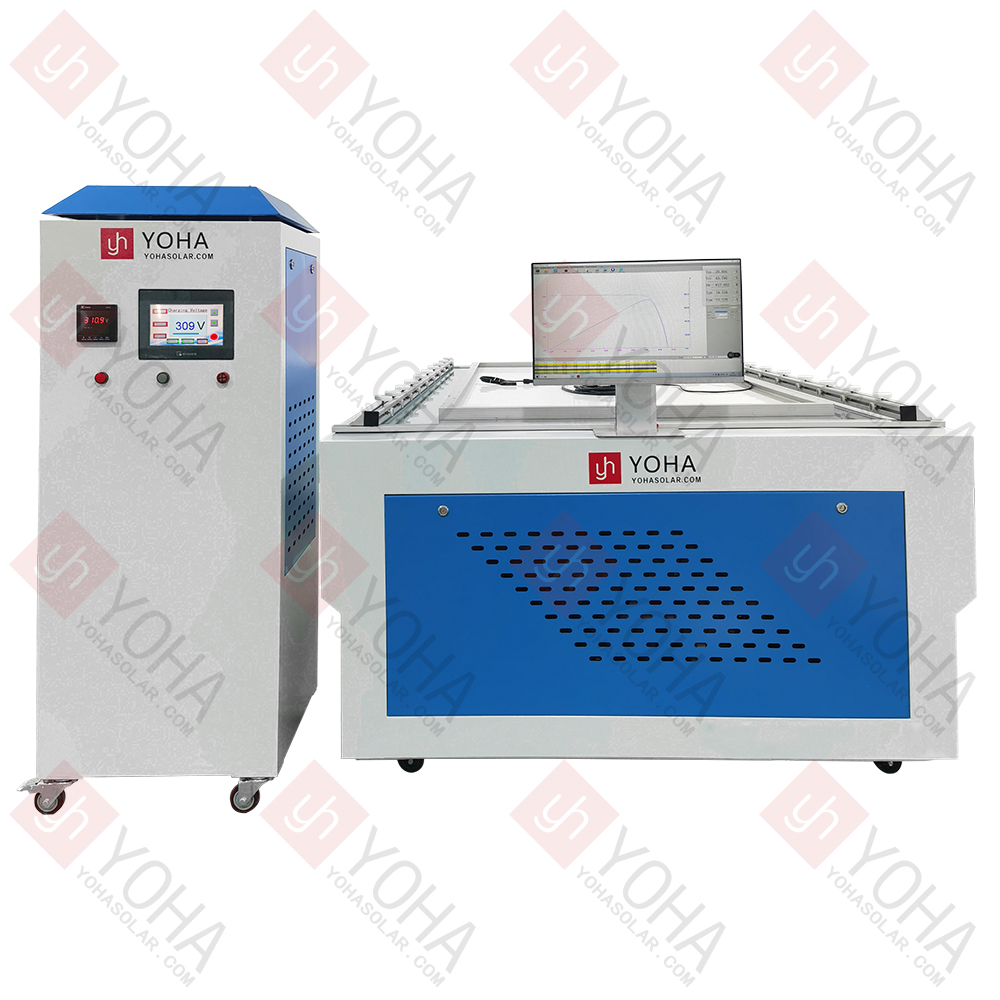
In the photovoltaic industry chain, module testers serve as core equipment for quality control and performance verification, and their importance is self-evident. They act like "medical examiners" for PV modules, precisely assessing their power generation efficiency, output characteristics, and reliability. However, any precision instrument is prone to measurement deviations over time or due to changes in the operating environment. Therefore, calibration—this crucial step ensuring the accuracy of test data—has become a focal point for PV equipment manufacturers and end-users. So, how often does a module tester typically need calibration? The answer is not a simple number, but rather a scientific decision determined by multiple intertwined factors.

002 (2).jpg

The Essence and Value of Calibration

The core of calibration is to verify and adjust the tester's measured values by comparing them with a higher-accuracy standard, bringing them as close as possible to the true value. For PV module testing, even minor deviations can lead to power measurement errors, potentially triggering commercial disputes, affecting power station generation forecasts, and even damaging a company's reputation. For example, if a tester that hasn't been calibrated on time underestimates a module's actual power by 1%, it could result in an evaluation discrepancy of millions of RMB in a large-scale power plant project. Thus, calibration is not just a technical procedure; it's a critical point for quality assurance and economic risk control.

Key Factors Influencing the Calibration Cycle

  1. The Equipment's Own Performance and Manufacturer's Recommendations
    Different brands and models of testers have varying recommended calibration cycles due to differences in design, materials used, and the stability of core sensors (such as spectral match, temperature control accuracy). Typically, manufacturers provide a basic calibration interval, such as 12 months, based on reliability tests and data simulation. This is the primary reference for users establishing a calibration plan, but it should not be the sole basis.

  2. Usage Frequency and Testing Intensity
    The usage conditions of the tester directly affect the rate of its performance degradation. A tester operating continuously under high load at the end of a production line will inevitably experience faster aging of its optical components and electronic circuits compared to one used only for sampling inspection or R&D. The former might require shortening the cycle to 6 months or even less, while the latter, under lower intensity use, might extend it to 18 months. The key is to establish a dynamic assessment mechanism based on the number of tests performed or operating hours.

  3. Severity of the Testing Environment
    PV testers often work in varying environments. Temperature fluctuations, dust in the air, chemically corrosive gases, or accidental mechanical vibrations within a workshop can subtly alter the instrument's internal reference. Equipment remains more stable in strictly controlled environments like constant temperature/humidity clean rooms; whereas in sites with large temperature/humidity swings and high dust levels, environmental stress accelerates instrument drift, necessitating more frequent calibration.

  4. Accuracy Requirements for Measurement Results
    The calibration cycle is ultimately set to serve the goal of controlling measurement uncertainty. In scenarios highly sensitive to data, such as power acceptance for PV module sales/purchases or precise grading by certification bodies, where test uncertainty must be controlled within a very narrow range (e.g., within ±1%), shorter calibration cycles are often required. Sometimes, intermediate checks are even incorporated within the calibration interval to continuously monitor the instrument's status.

  5. Regulatory and Standard Mandatory Requirements
    Certain markets or certification systems (such as those related to testing laboratory accreditation under the IEC 60904 series standards) may have explicit, mandatory requirements for the calibration frequency of test equipment. Companies participating in these systems must strictly adhere to the stipulated cycles, leaving no room for flexibility.

Industry Common Practices and Scientific Cycle Determination

Overall, the PV industry's approach to calibrating module testers generally follows a basic principle: combining periodic calibration with status monitoring.

  • Commonly Recommended Cycle: Under normal usage conditions and medium-level accuracy requirements, 12 months is a baseline cycle adopted by many manufacturers and independent laboratories. This cycle strikes a good balance between cost control and ensuring accuracy.

  • Dynamic Adjustment Strategy: Advanced equipment management no longer adheres to rigid schedules. By analyzing historical data trends of the tester or utilizing built-in self-diagnostic and calibration traceability functions for intermediate checks, if data drift is found to exceed a preset threshold, calibration should be performed immediately, regardless of the due date. This represents an upgrade from "preventive maintenance" to "predictive maintenance."

  • Shortened Cycles under Specific Circumstances:

    • During the initial operation of new equipment, closer monitoring is recommended, with the first calibration possibly at 3-6 months.

    • Calibration is mandatory after repairs, replacement of key components, or significant environmental changes.

    • Before conducting critical tests on products with tight tolerances, if there is doubt about the instrument's status, adding a calibration is a prudent measure.

Implementation and Follow-up of Calibration

A complete calibration should be entrusted to a qualified third-party metrology institution or the equipment manufacturer. The calibration process should simulate actual testing conditions and cover the tester's entire range and key function points. After calibration, the user receives not only the adjusted equipment but, more importantly, a detailed calibration report. This report records the calibration date, standard instrument information, measurement deviations, correction values, and the instrument's uncertainty post-calibration. It is the "birth certificate" for data validity and must be properly kept.

Furthermore, establishing a clear equipment history for each calibration, tracking its accuracy changes over time, provides valuable data support for optimizing future calibration cycles.

Conclusion

Returning to the core question: How often does a PV module tester need calibration? The most accurate answer is—it depends on a risk-assessed dynamic strategy. Consider 12 months as a starting point, but it must be integrated with the equipment's usage intensity, environmental stress, accuracy requirements, and regulatory mandates for a personalized determination. In the increasingly competitive and rapidly evolving PV field, ensuring the absolute credibility of every test report is fundamental to building a brand's foundation. The prudent management of the calibration cycle is a subtle embodiment of this professional spirit and quality commitment. It safeguards not only the accuracy of data but also the industry's confidence in a clean energy future and the value of its investments.


 上一篇:On the Key Performance Testing Focuses of IV Testers in Photovoltaic Production
 下一篇:Opportunities Behind the Challenges of PV Module Automated Production Lines and