Driven by the global wave of energy transition, the photovoltaic industry, as a core pillar of clean energy, is experiencing unprecedented development opportunities. Among these, automated production lines for PV modules, a key link in enhancing industrial efficiency and scale, are held in high regard. However, opportunities and challenges often coexist. While automation brings high efficiency, precision, and low cost, it also faces multiple challenges in technology, cost, and adaptability. Only by deeply analyzing these difficulties and finding practical solutions can the photovoltaic industry advance steadily and sustainably amidst its rapid progress.
I. Opportunity: Industry Transformation Driven by Automation
The rise of automated production lines for PV modules is an inevitable trend in industry development. With the surging global demand for renewable energy and the continuous expansion of the PV market, traditional production models reliant on manual labor can no longer meet the requirements for scale, standardization, and cost reduction/efficiency improvement. Automated production lines, through the integrated application of technologies like robotic arms, intelligent sensors, and the Industrial Internet of Things, enable fully unmanned operations from tabber stringing and lamination to testing and sorting, significantly enhancing production efficiency and product consistency.
Furthermore, automated production lines can substantially reduce labor costs, minimize human error, and improve yield rates. Against the backdrop of accelerating technological iteration, automated systems can also flexibly adapt to new module technologies, such as bifacial modules and half-cut cells, providing room for future technological upgrades. In the long term, automation is not only essential for enterprises to compete globally but also a key support for driving grid parity for PV and achieving sustainable energy development.
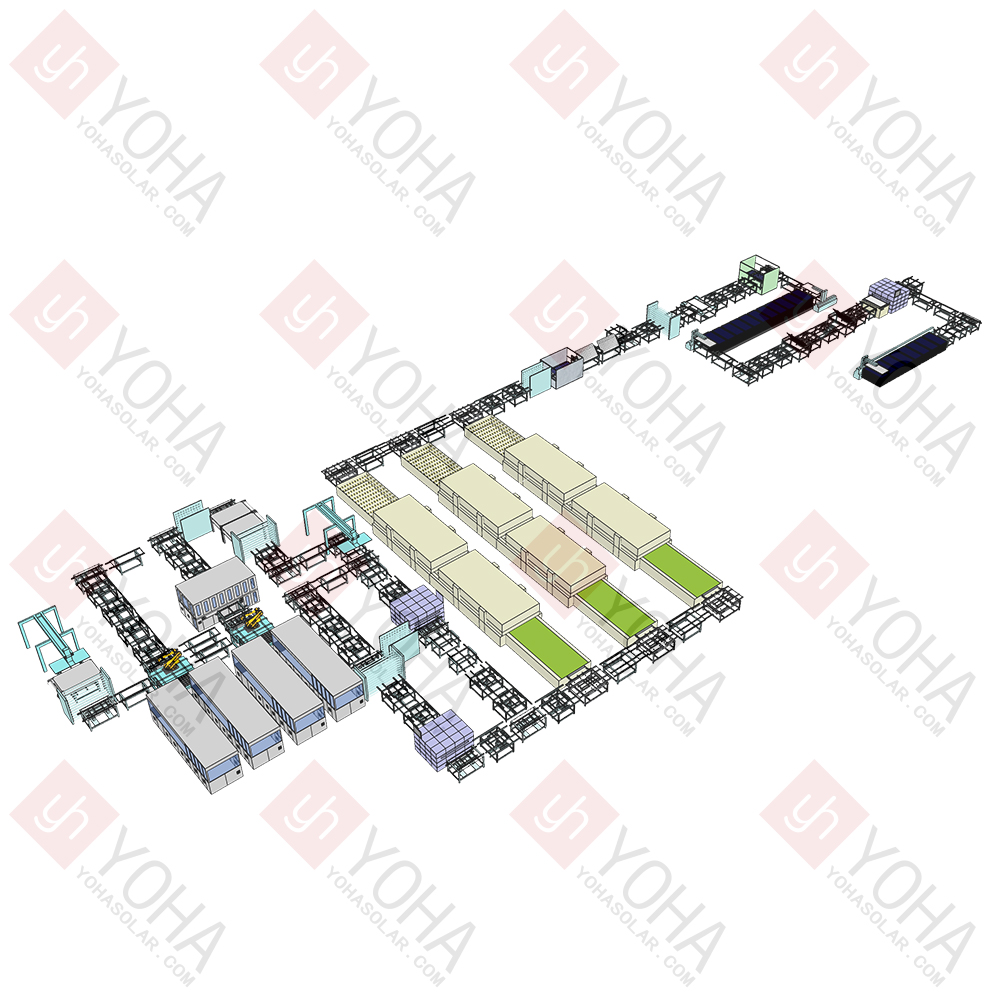
II. Challenges: Undercurrents and Hidden Risks on the Path Forward
Despite the bright prospects, the promotion and application of automated PV module production lines still face numerous challenges.
Firstly, technology integration and stability are core difficulties. PV module production involves multiple precise process steps; automated equipment must maintain long-term stable operation while performing high-precision tasks. However, some current automated systems lack sufficient adaptability in complex process scenarios, often leading to frequent failures, long debugging cycles, and impacts on overall production efficiency.
Secondly, the initial investment cost is high. The R&D, introduction, and maintenance of automated production lines require significant capital investment, posing a high barrier for small and medium-sized enterprises. Even for large enterprises with strong financial capabilities, uncertainty regarding the return on investment period makes decision-making cautious.
Thirdly, rapid technological and market iterations place higher demands on automated production lines. With ever-evolving PV technology and constant updates in module types and specifications, production lines need to be highly flexible and reconfigurable. If automated equipment cannot adapt to new technologies promptly, it risks becoming obsolete in a short time.
Additionally, talent shortage is a major pain point. The operation and maintenance of automated production lines require interdisciplinary professional teams, covering fields such as mechanical engineering, software programming, and data analysis. Currently, there is an insufficient supply of talent with relevant skills, limiting the deployment and optimization of automation technology.
III. The Path Forward: Comprehensive Upgrades from Technology to Ecosystem
To address these challenges, enterprises need to seek breakthroughs at multiple levels—technological, managerial, and ecological—transforming challenges into drivers.
Technology Level: Strengthening Innovation and Integration
Automation technology must be deeply integrated with PV processes. Enterprises should increase investment in R&D for technologies like smart sensors, machine vision, and digital twins to enhance the intelligence level of equipment. Through real-time data collection and analysis, precise control of the production process and predictive maintenance can be achieved, reducing downtime. Simultaneously, promoting modular design enables production lines to be flexibly adjusted and quickly adapted to new technologies and processes.
Cost Level: Optimizing Investment and Operation Models
To tackle the high initial investment, enterprises can adopt a phased implementation strategy, prioritizing the introduction of automation in key processes and gradually expanding its scope. Furthermore, exploring models like financial leasing and cooperative co-build with equipment suppliers can alleviate financial pressure. Through refined operation and energy efficiency management, long-term production costs can be further reduced, shortening the investment payback period.
Talent Level: Building Specialized Teams
Enterprises need to strengthen cooperation with universities and research institutions to cultivate interdisciplinary talent with knowledge in both PV technology and automation. Internally, establishing training systems and optimizing incentive mechanisms can enhance the technical skills of existing teams. Additionally, introducing external expert resources to form a dual-drive approach of "internal cultivation + external introduction" will provide solid talent support for automated production.
Ecosystem Level: Promoting Collaborative Industry Development
The wide spread adoption of automated PV module production lines cannot be separated depends on the overall progress of the industry. Enterprises should actively participate in standard-setting, promoting the standardization of equipment interfaces and communication protocols to reduce integration difficulties. Through industrial chain collaboration, upstream and downstream enterprises can work together to solve technical challenges. Moreover, policy support is crucial; governments can encourage enterprises to automate through subsidies, tax incentives, and other means, creating a favorable development environment.
IV. Conclusion
Automated production lines for PV modules are the necessary path for the industry to move towards high efficiency and intelligence. Although the road ahead is filled with challenges, through technological innovation, cost optimization, talent cultivation, and ecosystem co-construction, enterprises are bound to seize the initiative in this wave. The future PV industry will no longer compete on single links but on the efficiency and resilience of the entire chain. Only by basing itself on automation and steering towards intelligence can it write a profound chapter in the grand narrative of the energy revolution.