Against the backdrop of increasingly diverse PV application scenarios, a well-designed 50MW manual PV module production line with scientifically selected equipment holds irreplaceable value for specific niche markets, R&D/teaching, and small-batch, multi-specification flexible production needs. Unlike fully automatic lines that prioritize high-speed mass production, manual lines focus more on balancing equipment stability, user-friendliness, and return on investment. The core of successfully establishing such a line lies in a deep understanding and rational selection of key process equipment. This article systematically elaborates on the key equipment configuration points required for building this capacity. I. Cell Handling and Stringing Section: The Source and Quality Foundation The initial stages of the line directly determine the smoothness of subsequent processes and the initial quality of the final product. Cell Sorting Equipment: As the first quality checkpoint, equipping a precise Electroluminescence (EL)+IV test sorter is advisable. It can not only sort cells based on electrical parameters (power, current, voltage, etc.) but also visually identify internal defects like micro-cracks, chips, and efficiency variations through EL imaging. Precise sorting is crucial for ensuring performance consistency among cells within the same module, effectively enhancing the output power and yield of the final product. 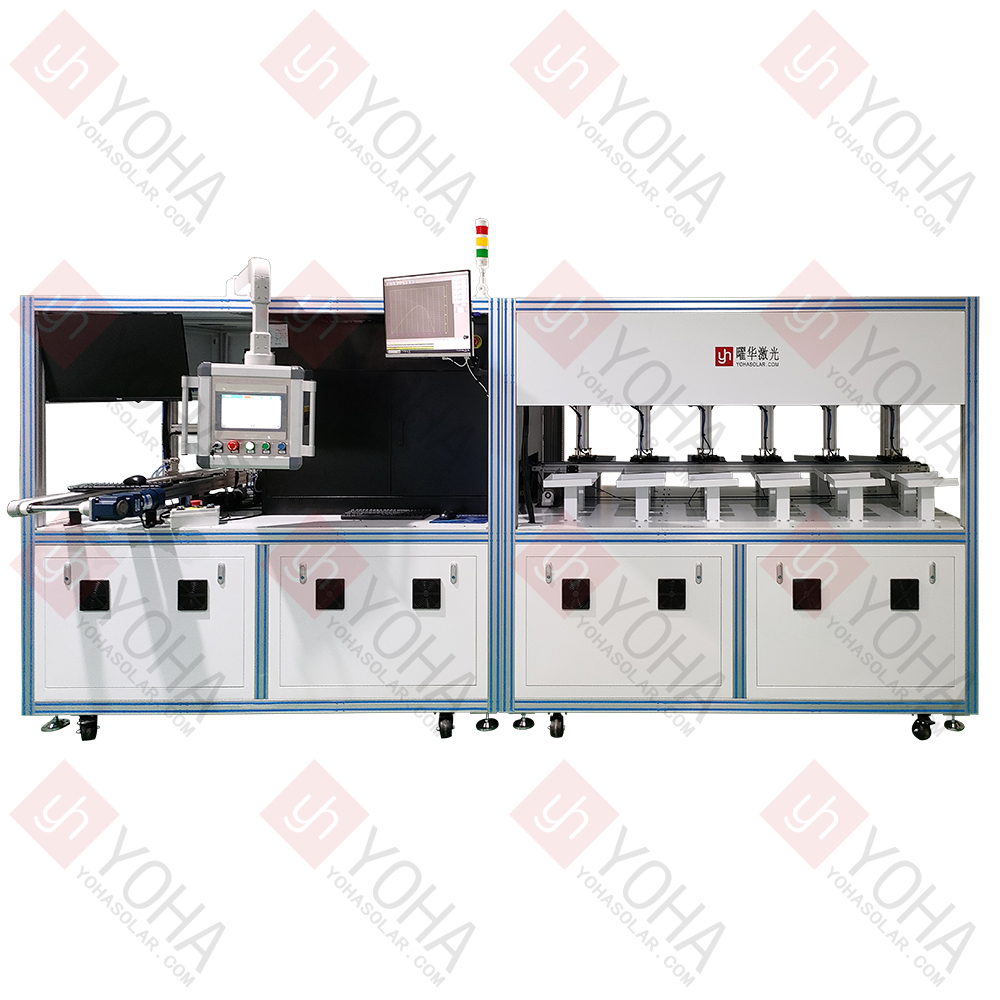
Laser Scribing Equipment: To adapt to diverse module layout designs, splitting full cells is often necessary. A stable laser scribing machine is essential. It uses high-precision lasers for clean, damage-free cutting of cells, with smooth edges and high efficiency, significantly reducing mechanical stress damage and micro-crack risk, providing high-quality semi-finished products for the subsequent soldering process. String Soldering Equipment: This step is a key point for improving efficiency in a manual production line. Although defined as a manual line, introducing a semi-automatic stringer in the soldering section is a common and efficient choice. This equipment automatically positions tabbing ribbons precisely onto the cell busbars and completes the soldering via a heating system to form cell strings. This not only significantly improves soldering efficiency and consistency but also effectively avoids common defects in purely manual soldering, such as poor soldering and oversoldering, ensuring uniform series resistance.
II. Core Module Encapsulation Processes: Lamination and Pre-lamination Preparation After the cell strings are prepared, the key stage of encapsulating the cell circuit into a durable module begins. Module Layup Station: This is the core area for manual operation. An excellent layup station typically features a flat stainless steel or granite table surface integrated with precise positioning guides and a vacuum adsorption system. Operators sequentially lay the backsheet, EVA film, cell strings, top EVA, and glass here to complete the stack. Vacuum adsorption effectively fixes the materials, preventing displacement during handling and ensuring accurate layup. Lamination Equipment: The laminator can be called the "heart" of the module production line, its performance directly determining the encapsulation quality and lifespan of the module. For a 50MW capacity, equipment with a chamber size matching common module specifications should be selected. It firmly bonds the cells, glass, and backsheet into a single unit by applying high temperature and pressure in a vacuum environment, melting the EVA, causing it to flow and cross-link/cure, and expelling internal air bubbles. Key selection criteria include temperature control accuracy, vacuum level, pressure uniformity, and operational stability to ensure optimal encapsulation for every module, resulting in excellent weather resistance and insulation. EL Testing Equipment: After the lamination process, internal defect inspection of the module is mandatory. A Post-Lamination EL tester (a Pre-Lamination EL tester can be optionally configured) is an essential quality control tool. By passing a current through the module and capturing the luminescence image, it can clearly reveal potential issues such as micro-cracks, broken fingers, poor soldering, and chips that may have occurred during the production process. It is a core diagnostic tool for safeguarding the intrinsic quality of outgoing modules.
III. Final Assembly and Performance Testing: Back-End Processing and Test Section The encapsulated module requires final processing to become a finished product. Edge Trimming and Framing Equipment: Excess EVA溢出 at the module edges after lamination needs to be cleaned by an edge trimming machine. Subsequently, the module enters the framing process. Manual framing machines typically use hydraulic or pneumatic methods to assist operators in precisely snapping and fastening the aluminum frame onto the module edges. The stability and ease of use of this equipment directly affect the firmness and aesthetics of the frame installation. Potting/Silicone Application Equipment: Before installing the frame, silicone (potting) needs to be injected into the frame groove or a sealant strip (silicone application) needs to be applied to achieve edge sealing and moisture prevention. A metering-accurate potting machine or an easy-to-operate sealant application device can reliably ensure the long-term sealing performance of the module, preventing moisture ingress. Junction Box Installation and Curing Equipment: The junction box is the hub for the module's power output. Typically, a soldering iron or specialized bonding tools are needed to reliably connect the diodes inside the box to the module's string ribbons, and silicone or adhesive tape is used to firmly attach it to the backsheet. Subsequently, a curing rack or curing tunnel might be required, using constant heat to promote full curing of the silicone, ensuring the junction box's adhesion strength and sealing reliability. IV Tester: This is the authoritative tool for verifying the final performance of the module. The IV tester simulates Standard Test Conditions (STC), accurately measuring key electrical parameters of the module such as peak power, current and voltage at maximum power point, open-circuit voltage, short-circuit current, and fill factor, and performs power sorting (binning) of the modules. For a 50MW line, configuring a high-precision, high-stability IV tester is fundamental to ensuring accurate power rating and maintaining brand reputation.
Summary: Systematic Planning is the Key to Success Building a 50MW manual PV module production line involves an organic system composed of a series of precise equipment for sorting, scribing, soldering, layup, lamination, and testing. Equipment selection is not simply about accumulation but should be based on a profound understanding of the production workflow, pursuing capacity matching, process衔接, and operational smoothness between various equipment pieces. Within the budget framework, prioritizing the performance and reliability of core quality control equipment like the laminator, EL tester, and IV tester is crucial for a successful investment. Through scientific selection and configuration, such manual production lines can fully and stably produce PV modules of excellent quality and reliable performance, creating significant value in specific application fields.
|