Before delving into the differences between manual and automated options, we must first clarify the importance of the EL tester. It is a non-destructive testing device that utilizes the principle of electroluminescence to inspect solar cell modules. By applying a bias current, the module emits near-infrared light, revealing internal defects such as micro-cracks, fragments, broken grids, black cores, and PID degradation as abnormal images like dark or bright spots. This device serves as the "sharp eyes" before modules leave the factory, acting as the gatekeeper for product reliability and the long-term power generation revenue of power plants. Manual Solar Module EL Tester: The Embodiment of Flexibility and Economy
As the name suggests, the core operations of a manual EL tester—loading and unloading modules, alignment, and moving the testing platform—all require manual intervention. 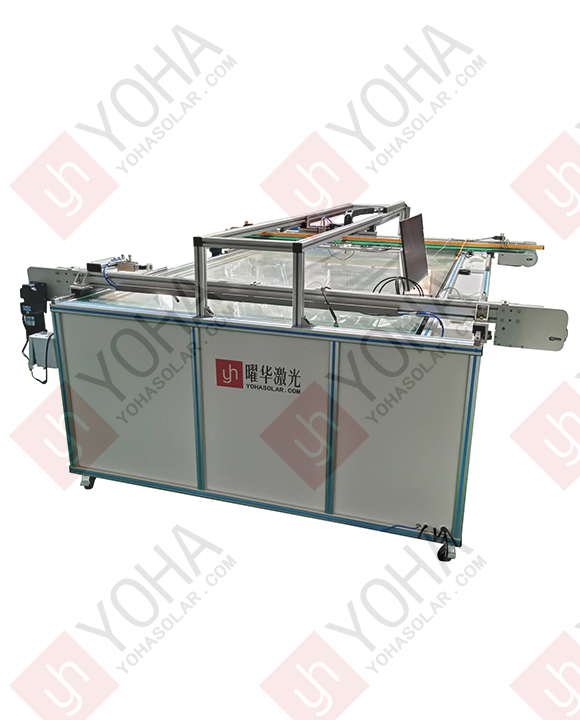
Core Advantages: Low Initial Investment Cost: This is the most significant advantage of manual testers. Due to their relatively simple mechanical structure and the absence of expensive automated transmission and positioning systems, they are highly attractive in terms of procurement price, especially for start-ups or small production workshops with limited budgets. Operational Flexibility and Strong Adaptability: For non-standard sizes, special shapes (such as double-glass modules, irregularly shaped modules), or sample testing during R&D, manual testers offer unparalleled flexibility. Operators can easily adjust the position and angle of the module to ensure testing effectiveness. Simple Maintenance and Low Failure Rate: A simple structure means fewer potential points of failure. Daily maintenance and troubleshooting are relatively easy, requiring less technical expertise from maintenance personnel, effectively reducing Post maintenance costs and time
Main Limitations: Production Efficiency Bottleneck: Manual loading/unloading, alignment, and initiating tests each consume time. On a mass production line, manual operations become a bottleneck for production efficiency, making it difficult to match the production pace of high-speed stringer machines and laminators. High Dependence on Personnel: Testing efficiency and quality largely depend on the operator's skill and sense of responsibility. Operator fatigue, negligence, or turnover can directly impact the consistency and reliability of testing. Risk of Human Error: Manual alignment can lead to slight deviations, affecting image consistency. Prolonged repetitive labor may also result in missed inspections or misjudgments.
Automated Solar Module EL Tester: Guarantee of Efficiency and Consistency
Automated solar module EL testers integrate automatic loading/unloading mechanisms, precise positioning systems, and integrated control software, achieving full automation from module input to test completion and output. Core Advantages: Extremely High Production Efficiency: This is the core value of automated testers. They can seamlessly integrate into production lines, enabling 7x24 hours of uninterrupted operation. With fast testing cycles, they easily match the production speed of modern GW-level production lines, significantly enhancing overall capacity. Excellent Testing Consistency and Reliability: Fully automated mechanical operation eliminates interference from human factors. Each test's positioning, exposure time, and image capture position are precise and consistent, ensuring objective, fair, and traceable test results, greatly improving product quality stability. Labor Cost Savings and Move Towards "Unmanned" Operations: Typically, only one employee is needed to monitor and occasionally intervene, greatly freeing up labor and reducing long-term labor and management costs. It is a key step towards "Industry 4.0" and smart factories.
Primary Considerations: High Initial Investment: Automated robotic arms, precision guides, sensor control systems, etc., lead to manufacturing costs far exceeding those of manual testers, representing a significant upfront capital expenditure. Requirements for Space and Supporting Infrastructure: Automated lines usually require longer conveyor layouts and have certain space requirements for the workshop. Furthermore, they require good communication and pace matching with equipment in preceding and subsequent processes. Maintenance Complexity and Cost: Complex mechatronic systems necessitate more specialized maintenance teams and higher spare parts costs. If a failure occurs, the impact on the production line is also greater.
Manual vs. Automated: How to Choose? Key Decision Factors
When faced with the choice between manual and automated solar module EL testers, your decision should be based on a comprehensive evaluation of the following points: Production Capacity and Pace Requirements: Choose Manual: If you are an R&D lab, academic research institution, or a specialized workshop focusing on small-batch, multi-specification production with an annual capacity below the hundred-megawatt level, the flexibility and low investment of a manual tester are the best choice. Choose Automated: If your production line targets GW-level capacity, pursuing high-cycle, large-volume continuous production, then the efficiency gains from an automated tester will far outweigh its initial investment.
Investment Budget and Payback Period: Budget-Oriented: If initial funds are tight and there is no clear path to recoup the automation investment through efficiency gains in the short term, a manual tester is a safe starting point. Value-Oriented: If you can handle a higher initial investment and value long-term labor savings, improved quality stability, and the comprehensive returns from capacity release, an automated tester is a more strategic choice.
Production Model and Product Type: Multi-variety, Small Batch: Manual testers excel in flexibility. Single Category, Large Batch: Automated testers are the inevitable choice for achieving economies of scale.
Requirements for Quality Consistency: For clients with extremely high demands on brand reputation, products used in large-scale ground power stations, or those with stringent reliability standards, the stable, "zero human intervention" quality provided by automated testers is their irreplaceable core value.
Future Development Plans: Your choice should have a degree of foresight. If you plan to rapidly expand and upgrade within the next 1-2 years, directly investing in an automated tester, or choosing a semi-automatic model that can be upgraded to automation, might be more economical than replacing equipment later.
Conclusion and Recommendations
In summary, there is no absolute superiority or inferiority between manual and automated solar module EL testers, only suitability. For enterprises in the start-up phase, focused on cost control, with diverse product types and low production capacity, the manual solar module EL tester, with its economy and flexibility, is a practical and wise choice. For enterprises committed to scaled development, pursuing ultimate efficiency, building a high-end brand image, and possessing the corresponding financial strength, the automated solar module EL tester is a necessary strategic investment. It is not only a tool to enhance current competitiveness but also a cornerstone for building the future smart factory.
As professional marketing personnel at Yaohua Laser, we recommend that you conduct a comprehensive evaluation based on your actual production needs, financial planning, and development blueprint. Regardless of which type of solar module EL tester you ultimately choose, the fundamental purpose is to better control product quality and enhance market competitiveness. We hope this article provides you with clear and valuable reference on your equipment selection journey.
|