Perovskite solar cells, as an emerging technology in the photovoltaic field, are rapidly becoming an industry focus due to their high conversion efficiency and potential for low manufacturing costs. In the research, development, and production processes of perovskite batteries, the IV tester is an indispensable tool capable of precisely evaluating the battery's performance parameters. This article will provide an in-depth analysis of the basic principles of the perovskite battery IV tester, helping readers fully understand its working mechanism and importance. As marketing personnel at Yaohua Laser, we are committed to providing professional knowledge of photovoltaic equipment to support industry innovation and development. The basic principles of the perovskite battery IV tester involve not only the measurement of current-voltage characteristics but also a comprehensive evaluation of the battery's efficiency, stability, and reliability. By mastering the basic principles of the perovskite battery IV tester, enterprises can optimize production processes and enhance product quality.
Introduction to Perovskite Batteries
Perovskite solar cells are photovoltaic devices based on perovskite-structured materials, typically composed of organic-inorganic hybrid materials, possessing excellent light absorption properties and charge transport characteristics. The conversion efficiency of these cells has increased from single digits to over 25% within just a few years, demonstrating significant commercial potential. The structure of perovskite batteries is simple and can be prepared using solution-based methods, thereby reducing production costs. However, their performance is greatly influenced by material stability, environmental factors, and manufacturing processes, thus requiring precise testing methods for monitoring and optimization. The IV tester is designed precisely for this purpose; it provides key performance indicators by measuring the battery's current-voltage (I-V) curve. Understanding the basic principles of the perovskite battery IV tester helps control battery quality from the source and promotes advancements in photovoltaic technology.
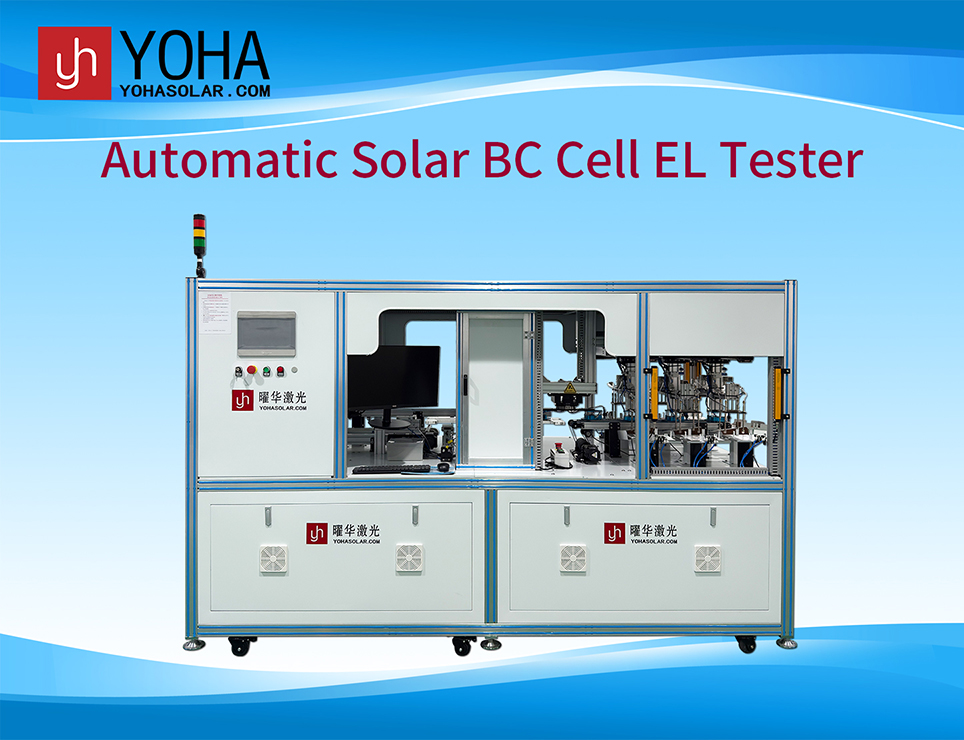
Overview of IV Testers
An IV tester, fully known as a Current-Voltage tester, is a standard device in the photovoltaic industry used for characterizing the performance of solar cells. It generates an I-V curve by applying a variable voltage and measuring the corresponding current, thereby revealing the electrical characteristics of the cell. For perovskite batteries, the IV tester can not only evaluate basic parameters but also detect behavioral differences under illuminated or dark conditions. IV testers typically include a light simulator, voltage source, current measurement unit, and data acquisition system. These components work together to ensure the accuracy and repeatability of test results. The basic principle of the perovskite battery IV tester lies in simulating real light conditions, measuring the output response of the battery, and subsequently calculating metrics such as efficiency and fill factor. Mastering the basic principles of the perovskite battery IV tester is fundamental for R&D personnel and producers to ensure consistent battery performance.
Basic Principles of the Perovskite Battery IV Tester
The core principle of the perovskite battery IV tester is to characterize battery performance through the measurement of the current-voltage (I-V) curve. The I-V curve is a graph describing the output current of the battery at different voltages, visually displaying the battery's operating state. During testing, the IV tester applies a sweep voltage from negative to positive to the perovskite battery while precisely measuring the current flowing through it. This process is usually conducted under Standard Test Conditions, such as simulating the AM1.5 solar spectrum, to ensure result comparability. The basic principles of the perovskite battery IV tester involve several key steps: First, the tester uses its built-in light source to simulate solar radiation, activating the battery to generate photogenerated carriers. Second, the voltage source applies a linearly varying bias voltage, and the current measurement unit records the corresponding current values. Finally, the data system processes these points to plot the I-V curve.
Within the basic principles of the perovskite battery IV tester, the analysis of the I-V curve is crucial. Characteristic points on the curve include the open-circuit voltage (Voc), short-circuit current (Isc), maximum power point (MPP), and fill factor (FF). The open-circuit voltage refers to the terminal voltage of the battery under no-load conditions, reflecting the built-in potential of the battery; the short-circuit current is the output current of the battery in a short-circuited state, representing the generation capability of photogenerated carriers. The basic principles of the perovskite battery IV tester also include calculating the fill factor, which is the ratio of the maximum power to the ideal power (Voc * Isc), reflecting the output efficiency of the cell. Conversion efficiency is derived from the ratio of the maximum power to the incident light power and is a core metric for measuring cell performance. The basic principles of the perovskite battery IV tester emphasize that these parameters collectively determine the practicality and reliability of the battery.
Furthermore, the basic principles of the perovskite battery IV tester also consider the dynamic characteristics of the cell. Perovskite materials may exhibit hysteresis effects, where differences appear in the I-V curve during forward and reverse voltage sweeps, stemming from ion migration or interfacial charge accumulation. Therefore, modern IV testers employ multiple sweep rates or bidirectional scanning to capture these phenomena, ensuring the comprehensiveness of test results. The basic principles of the perovskite battery IV tester also involve temperature and environmental control, as perovskite batteries are sensitive to humidity and temperature, requiring testing under stable conditions. In summary, the basic principles of the perovskite battery IV tester focus not only on static measurements but also integrate dynamic analysis to provide a more realistic performance evaluation.
Detailed Testing Process
Based on the basic principles of the perovskite battery IV tester, the testing process typically includes four stages: preparation, calibration, measurement, and data analysis. In the preparation stage, the perovskite battery sample is placed in the test fixture, ensuring good electrical contact and optical alignment. The test environment requires control of temperature, humidity, and light intensity to simulate standard conditions. The calibration stage involves calibrating the light source and electrical units of the IV tester, for example, using a reference cell to verify light intensity accuracy, which directly relates to the accuracy of the basic principles of the perovskite battery IV tester.
The measurement stage is the core. The IV tester applies a voltage sweep, from negative bias to positive bias, covering the entire operating range of the battery. The sweep rate needs to be adjusted according to the characteristics of the perovskite battery: too fast may fail to capture hysteresis effects, while too slow affects testing efficiency. During the measurement process, the IV tester records current and voltage data in real time, generating the raw I-V curve. The data analysis stage then applies the basic principles of the perovskite battery IV tester to extract parameters such as Voc, Isc, FF, and efficiency from the curve. This data can be used to compare the performance of different battery batches or to optimize manufacturing processes. The entire process reflects the rigor of applying the basic principles of the perovskite battery IV tester in practice, ensuring reliable and repeatable test results.
Importance and Application Prospects
Understanding the basic principles of the perovskite battery IV tester is of great significance for the photovoltaic industry. Firstly, it helps R&D personnel identify bottlenecks in battery performance, for example, analyzing material defects or interface issues through the I-V curve, thereby guiding material optimization. Secondly, on the production line, IV testers are used for quality control and sorting, ensuring only high-performance batteries enter the market. The basic principles of the perovskite battery IV tester also support long-term stability testing, monitoring battery degradation through repeated measurements, providing a basis for lifespan prediction. As perovskite batteries move towards commercialization, the accuracy and efficiency of IV testers will become key driving forces.
From an industry perspective, the basic principles of the perovskite battery IV tester are closely linked to sustainable development goals. Efficient testing can reduce resource waste, improve energy conversion efficiency, and contribute to the widespread adoption of green energy. Yaohua Laser, as a photovoltaic equipment enterprise, continuously focuses on innovation related to the basic principles of the perovskite battery IV tester to provide more advanced testing solutions. In the future, as perovskite battery technology matures, IV testers may integrate more functions, such as multi-junction cell testing or in-situ monitoring, further enriching the connotation of the basic principles of the perovskite battery IV tester.
Conclusion
The basic principles of the perovskite battery IV tester are the cornerstone of the photovoltaic testing field, providing a comprehensive evaluation of battery performance through the measurement of current-voltage curves. This article has systematically elaborated on the basic principles of the perovskite battery IV tester, from I-V curve analysis to the testing process, emphasizing its key role in R&D and production. Mastering the basic principles of the perovskite battery IV tester not only helps improve battery efficiency but also promotes technological progress across the entire photovoltaic industry. Yaohua Laser will continue to delve into the research and development of photovoltaic equipment, providing customers with efficient tools based on the basic principles of the perovskite battery IV tester, and jointly welcome the future of clean energy. Through continuous exploration of the basic principles of the perovskite battery IV tester, we believe photovoltaic technology will achieve greater breakthroughs, contributing to the global energy transition.